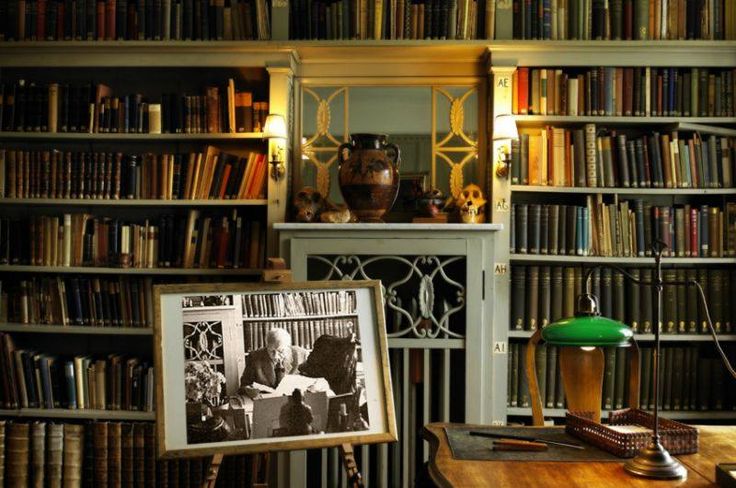
Jung's Library

“The main content of Jung’s private library was contemporary literature of the 19th and 20th century, mainly about medicine, psychiatry, psychology and philosophy. Additionally there are a great number of books on antique cultures, gnosis, christian symbols, eastern religion, ethnology and occultism. The library also contains a collection of about 300 rare books (printed before 1800) on alchemy, theurgy and kabbala, as well as antique literature on dreams, writings of church fathers and of the latin and greek classic.”

The North West Arkansas Friends of Jung

The CIty-States of what is now called Greece

  • Charles
  • Topic Author
  • Offline
  • Administrator
  • Administrator
More
1 week 2 days ago #66 by Charles
From the National Geographic online encyclopedia: A city-state, or polis, was the community structure of ancient Greece. Each city-state was organized with an urban center and the surrounding countryside. Characteristics of the city in a polis were outer walls for protection, as well as a public space that included temples and government buildings. The temples and government buildings were often built on the top of a hill, or acropolis. A surviving example of a structure central to an ancient acropolis is the famous Parthenon of Athens. The Parthenon was a temple built to honor the goddess Athena. The majority of a polis’s population lived in the city, as it was the center of trade, commerce, culture, and political activity.There grew to be over 1,000 city-states in ancient Greece, but the main poleis were Athína (Athens), Spárti (Sparta), Kórinthos (Corinth), Thíva (Thebes), Siracusa (Syracuse), Égina (Aegina), Ródos (Rhodes), Árgos, Erétria, and Elis. Each city-state ruled itself. 

Please Log in or Create an account to join the conversation.

Time to create page: 0.142 seconds